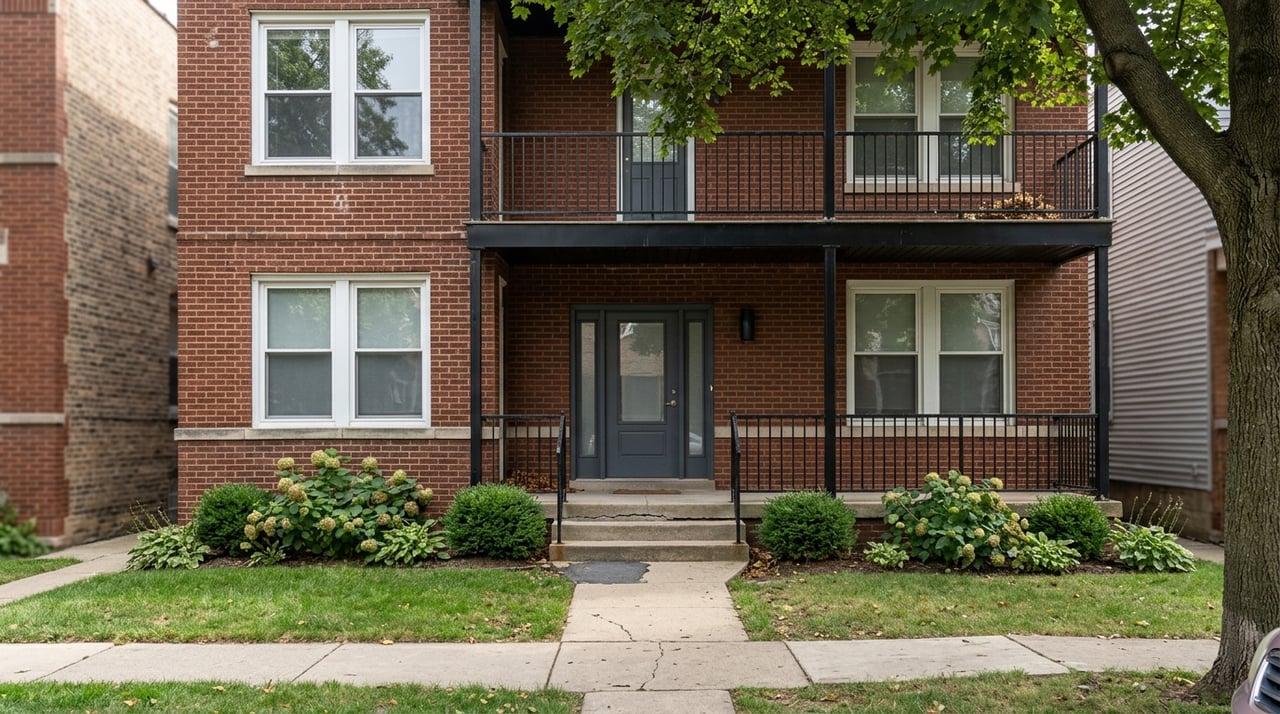
If you are looking at small multifamily deals in Calumet City, the opportunity is real, but so is the homework. You may be drawn to the idea of living in one unit, renting the others, or buying a modest income property at an attainable price point. The key is knowing how to read the numbers, spot the likely repair issues, and plan for local compliance before you get too far down the road. Let’s dive in.
Why Calumet City Stands Out
Calumet City has a meaningful base of two-to-four-unit housing. According to the local housing profile, there are 2,743 two-to-four-unit structures, which make up 16.3% of the housing stock. That is a notable share for buyers who want options beyond single-family homes.
This is also a market where pricing can feel more approachable than many other parts of Cook County. Public market snapshots place citywide home values and sale prices mostly in the low-to-high $160,000 range, while active multifamily listings range from about $159,500 to $410,000. Many available examples fall between roughly $205,000 and $325,000, which gives you a workable starting point when comparing deals.
Another reason this niche matters is buyer activity. Investor buyers accounted for 24.0% of residential sales in 2022, and recent one-to-four-unit purchase loans had a median purchase price of $180,625. That tells you small multifamily is not a side story here. It is part of the local market.
What the Housing Stock Means
Older buildings shape how you should evaluate these properties. Calumet City’s median year built is 1968, 35.6% of units were built before 1960, and about 82% were built before 1980. In practical terms, that often means your budget needs to account for more than paint and flooring.
With older small multifamily properties, common repair items may include roofs, masonry, plumbing stacks, electrical service, windows, basement water intrusion, and heating equipment. Even when a building looks clean on the surface, the expensive work can sit behind the walls, under the roofline, or below grade. That is why a lower purchase price does not always mean a lower total cost.
If the property was built before 1978, lead-safe handling and disclosures matter too. Work that disturbs painted surfaces in pre-1978 housing can create dangerous lead dust, and federal lead disclosure rules apply to most pre-1978 homes that are sold or leased. In a market with so much older housing, this is not a minor detail.
How to Read Price and Rent Data
One of the most important steps in evaluating a small multifamily deal is staying realistic about income. In Calumet City, public rent data vary depending on the source and method. Zillow shows an average rent of $1,582, Realtor.com shows a median rent of $1,800, and the CMAP housing profile reports a 2023 median gross rent of $1,138.
Those numbers are not necessarily conflicting. Gross rent data can include utilities and reflect occupied units, while asking-rent data show what landlords are trying to achieve in the current market. For underwriting, the smart move is to treat the lower end of the rent range as your baseline and use the higher end only if the unit condition, size, and location support it.
Current listing examples help add context. Public rental listings show about $1,100 for a one-bedroom, around $1,600 to $1,800 for two-bedroom units, and about $1,600 to $1,750 for three-bedroom units. HUD’s small-area fair market rent schedule for ZIP code 60409 lists $1,450 for a two-bedroom, $1,870 for a three-bedroom, and $2,160 for a four-bedroom, which can serve as another conservative reference point.
Why Unit Mix Matters
Not every building layout performs the same way. In Calumet City, renter household size skews smaller, with 44.6% of renter households made up of one person and 26.2% made up of two people. That means one-bedroom and two-bedroom units deserve close attention when you are evaluating demand.
A building with smaller, functional units may line up well with the local renter profile. That does not make larger units a bad play, but it does mean you should be careful about assuming top-of-market rents for oversized layouts. The more closely your unit mix matches real local demand, the steadier your rental strategy may be.
Underwrite Conservatively From Day One
The safest approach in Calumet City is conservative underwriting. Start with realistic rents, then build in the real monthly costs that can narrow your margin. That includes property taxes, insurance, utilities, maintenance, city fees, and permit costs.
This matters even for owner-occupants who plan to offset their housing payment with rental income. The local housing profile reports median monthly owner costs of $1,555 for owners with a mortgage and $721 for owners without a mortgage. Rental income can help, but it does not erase the cost of ownership.
You should also remember that renter demand can be price sensitive here. Renter households in Calumet City have a median income of $35,738, and 35.9% are severely cost burdened. That is another reason to avoid building your projections around the highest asking rent you can find online.
Plan for a Slower Exit Timeline
A small multifamily deal should work on paper even if resale takes longer than expected. Recent public market snapshots suggest a relatively patient market. Redfin reports around 100 days on market over the last three months, while Realtor.com reports a median of 62 days on market.
That does not mean homes do not sell. It means you should not assume a quick flip or a fast resale at your dream number. If your strategy depends on perfect timing, the deal may be too tight.
A better approach is to ask whether the property still works if repairs run higher, rents take time to stabilize, or your exit takes longer. In a market with wide pricing differences across multifamily listings, discipline matters more than optimism.
Know the Local Compliance Layer
In Calumet City, municipal compliance is not something to check at the last minute. The city requires non-owner occupied properties to register under its rental program ordinance, and annual rental and code-compliance inspections are required. Compliance is not considered official until the inspection is complete and a certificate of occupancy is issued.
That means a buyer should verify current status early. If you are purchasing a non-owner occupied property, you need to know whether it is registered, whether inspections are current, and whether any code issues remain unresolved. These items can affect both timing and cost.
Rehab also may require permit review before work begins. The city’s building-permit materials state that rehab, remodels, expansions, and additions may require permits and possibly third-party plan review. There is also a crime-free residential rental license process through the police department, which adds another operational step for rental owners.
Due Diligence Items to Request
Before you finalize an offer, gather the paperwork that helps you see the full picture. A prudent due-diligence package should include:
- Property PIN
- Current tax bill and payment status
- Rental-registration status
- City inspection status
- Certificate of occupancy information
- Lease roll
- Utility responsibility by unit
- Permit history
- Known code issues
- Known lead-related issues or disclosures
This list may not feel exciting, but it can protect you from surprises. In small multifamily deals, the paperwork often tells you as much as the walk-through.
Verify Tax Treatment Carefully
If you plan to live in the property, do not assume the seller’s property tax setup will carry over unchanged. Owner-occupant buyers should verify Cook County tax treatment directly. The Cook County Assessor states that the homeowner exemption saves an average of about $950 per year, which can affect your monthly cost picture.
This is especially important when comparing a property that was owner-occupied with one that was held as a rental. Your tax situation may change after purchase, and that change should be part of your budget from the beginning. Clear numbers lead to better decisions.
Where a Local Broker Adds Value
In Calumet City, buying or selling a small multifamily property is not just about finding a price. It is also about matching the property to the right strategy, whether that means owner-occupant use, long-term rental hold, or a stabilized resale after repairs. That takes local pricing judgment, process control, and strong follow-through.
This is where experience matters. A broker who understands older housing, distressed-property logistics, repair oversight, and compliance coordination can help you avoid common mistakes. In a market with layered municipal requirements and broad pricing ranges, clear guidance can save both time and money.
If you are exploring small multifamily deals in Calumet City, the best move is to stay practical. Focus on real rents, real repair costs, and real local requirements. When you approach the deal with discipline, you put yourself in a much stronger position to buy wisely or sell with confidence.
If you want steady, local guidance on a small multifamily purchase or sale, connect with Tamika Marks for practical support and a clear next-step plan.
FAQs
What makes Calumet City appealing for small multifamily buyers?
- Calumet City has a meaningful two-to-four-unit housing stock, relatively attainable pricing, and active investor participation, which makes it a notable local niche for owner-occupants and small investors.
What rent numbers should you use for a Calumet City multifamily deal?
- Start with conservative public rent anchors, especially at the lower end of current asking rents, and then compare them with unit size, condition, and HUD fair market rent figures for ZIP code 60409.
What repairs are common in older Calumet City multifamily properties?
- Common budget items can include roofs, masonry, plumbing stacks, electrical service, windows, basement water intrusion, and heating equipment because much of the local housing stock was built before 1980.
What city compliance issues matter for Calumet City rental property owners?
- Non-owner occupied properties must be registered under the city’s rental program, annual inspections are required, compliance depends on inspection and certificate of occupancy status, and some rehab work may require permits or plan review.
What should owner-occupant buyers verify about Cook County property taxes?
- You should verify current tax treatment, payment status, and possible eligibility for the homeowner exemption rather than assuming the seller’s tax bill will match your future ownership costs.
What documents should you review before buying a small multifamily property in Calumet City?
- You should request the PIN, tax bill, rental-registration status, inspection status, certificate of occupancy information, lease roll, utility responsibility, permit history, and any known code or lead-related issues.