Thinking about a south suburban move and wondering if Blue Island feels more like a practical place to live, a historic community, or a commuter-friendly option? The answer is that it can be all three. If you are weighing affordability, home style, transit access, and day-to-day atmosphere, Blue Island gives you a lot to consider. Let’s take a closer look.
Blue Island at a Glance
Blue Island is one of the oldest communities in Cook County, with roots that go back to 1835. The city connects its early growth to the Vincennes Trail, the Calumet feeder canal, and rail lines that later became part of today’s Metra network. That history still shows up in the streetscape, architecture, and overall feel of the city.
Recent Census data puts Blue Island’s population at 22,558. The same data shows an owner-occupied housing rate of 51.8 percent, a median owner-occupied home value of $178,700, and a median gross rent of $1,072. About 94.3 percent of residents age 1 and up lived in the same home one year earlier, which points to a community with a relatively stable residential base.
Blue Island is also a diverse city. Census figures show 47.5 percent Hispanic or Latino residents, 30.8 percent Black residents, 24.6 percent White residents, 22.0 percent foreign-born residents, and 39.3 percent of households speaking a language other than English at home. For many buyers and sellers, that mix is part of what makes the city feel established and lived-in rather than interchangeable.
Blue Island Housing Options
If you are trying to picture the local housing stock, Blue Island offers a broad mix rather than a one-size-fits-all market. CMAP data shows that 44.1 percent of homes are detached single-family properties. That is the largest share, but it is far from the whole story.
Two-unit buildings make up 11.0 percent of the housing stock, while three- or four-unit buildings account for 7.0 percent. Another 14.8 percent falls into 5- to 9-unit buildings, 9.5 percent into 10- to 19-unit buildings, and 5.4 percent into 20+ unit buildings. That variety matters if you are a buyer comparing a detached home to a two-flat or small multifamily property.
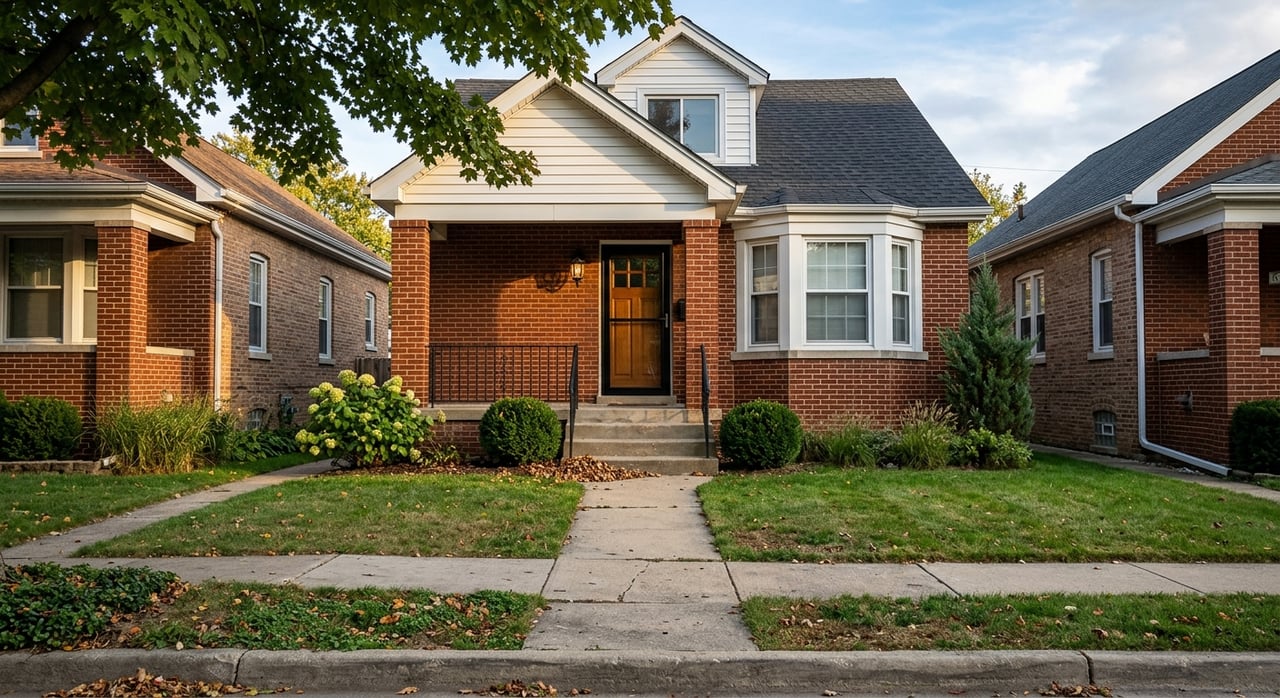
Housing age is another defining feature. About 26.7 percent of the housing stock was built before 1940, and the median year built is 1961. In practical terms, that means you may find older homes with character, established blocks, and layouts that differ from newer suburban construction.
What older housing can mean for you
Older housing can be a big draw if you like mature trees, traditional streets, and homes with long-standing curb appeal. It can also mean you will want to pay close attention to condition, updates, and maintenance history. That is especially important if you are considering a property that needs repairs or has been vacant.
For buyers, this mix can create more options at different price points and property types. For sellers, it means presentation, pricing, and repair planning can make a real difference in how your home competes. In a market with older inventory, details matter.
Historic Character in Daily Life
Blue Island’s historic identity is not just a marketing line. The city’s Historic Preservation Commission has been a Certified Local Government since 1981, and it handles landmark and historic district nominations, certificates of appropriateness, and technical assistance. That tells you preservation is an active part of the local landscape.
The city’s landmark resources show a built environment that stretches from before the Civil War into the early twentieth century. The Olde Western Avenue Historic District, created in 1983, includes homes and businesses that survived the 1896 fire. If you value places with visible history, Blue Island offers that in a way many suburbs do not.
Why preservation matters to buyers and owners
Historic character can shape everything from curb appeal to renovation decisions. If you are buying in or near a historic area, it is smart to understand how the property fits into the local context. If you already own there, preservation standards may affect exterior changes and long-term planning.
That does not make ownership harder by default. It simply means Blue Island has layers of identity that can matter when you are evaluating a home, a block, or a future project.
Commuting From Blue Island
For many households, commute time and regional access are a major part of the decision. Blue Island sits near Interstate 57, and the city places it about 15 miles from downtown Chicago’s Loop. Midway International Airport is about 12.5 miles away, and O’Hare is about 34 miles away.
Rail access is one of the city’s strongest everyday advantages. Blue Island describes itself as a Metra hub with six stations on the Rock Island District and Metra Electric lines. The Blue Island station at Vermont Street and Irving Avenue also connects to Pace routes 348, 349, 359, and 385.
CMAP data adds useful context to how people actually get around. About 69.4 percent of workers drive alone, 14.5 percent carpool, and 8.2 percent use transit. The mean commute time is 27.7 minutes, and 17.2 percent of households have no vehicle available.
What that means for everyday logistics
If you drive, Blue Island offers access to major roads and a location that supports regional travel. If you prefer transit or need a backup to driving, the local Metra and Pace connections are a meaningful advantage. That combination helps explain why Blue Island works for both commuters and households focused on staying connected without relying on a single mode of transportation.
Parks, Recreation, and Local Rhythm
A place does not feel like home based on housing alone. Blue Island Park District manages 10 public parks across 112 acres, and the city also highlights the John D. Rita Recreation Center, two community gardens, and Meadows Golf Club. Those amenities give residents a mix of outdoor space and organized recreation.
The Cal-Sag Trail is another everyday-life feature worth noting. The city highlights access from Freedom Park in nearby Alsip, and the multi-use trail runs along the Calumet-Sag Channel and Calumet River. When complete, the trail is expected to span 26 miles and connect fourteen communities.
For some buyers, nearby parks and trails are part of daily routine. For others, they simply add flexibility on weekends and evenings. Either way, they help shape what it feels like to live in the area beyond the walls of the home itself.
Culture, Events, and Western Avenue
Blue Island stands out for having a visible arts and heritage presence. The landmark tour highlights the Blue Island Opera House, once a vaudeville house and early talkie venue with Italianate details and a restored cornice. The Blue Island Historical Society museum in the public library’s lower level adds another layer to the city’s public history.
The Lyric Theater on Western Avenue adds a current-day entertainment option with live local music, food, drinks, concerts, tribute acts, film nights, and private events. That gives the city an active venue that residents can actually use, not just a historic building to admire from the sidewalk.
Seasonal events also help define the local rhythm. The city highlights traditions like the Fourth of July parade and the Light Parade, both of which run through the historic Western Avenue corridor. These kinds of recurring events can make a place feel connected and familiar over time.
Why Western Avenue matters
Western Avenue is the city’s main commercial spine for shopping, dining, and small-business activity. The Business Development District runs from 119th Street to 135th Street and from Vermont Street to Greenwood Avenue, covering the main corridor and reinforcing Uptown as a focal point.
For residents, that matters because it creates a defined local center rather than a scattered collection of stops. If you are deciding where to live, a functioning commercial corridor can add convenience and help shape your sense of place.
A Note for Buyers, Sellers, and Investors
Blue Island can appeal to different kinds of real estate goals. Buyers may be drawn to the mix of detached homes, two-units, and smaller multifamily properties, along with historic character and regional access. Sellers may benefit from understanding how condition, updates, and property type fit into a market with older housing stock and varied inventory.
For investor-minded readers, Blue Island also has a redevelopment story. The entire city lies within the Cal-Sag Enterprise Zone, and the Western Avenue Business Development District offers matching grants for eligible facade and site improvements, including a 100 percent match for signage. The city also states that it has several designated TIF districts.
If you are looking at a property with deferred maintenance, a complicated sale, or a small multifamily angle, local knowledge and process discipline matter. In a city with older homes and a layered housing mix, the right plan can help you avoid surprises and make smarter decisions.
Is Blue Island Right for You?
Blue Island offers a combination that can be hard to find in one place. You get historic character, a varied housing stock, established residential blocks, and practical access to rail, highways, and regional destinations. You also get parks, local events, and a commercial corridor that still plays a visible role in community life.
If you want a south suburban market that feels grounded rather than generic, Blue Island deserves a closer look. Whether you are buying your first home, selling an older property, or exploring a two-flat or small multifamily opportunity, it helps to work with someone who understands both the people side and the property side of the process.
If you are considering a move in Blue Island or need help navigating a sale, connect with Tamika Marks for clear guidance, local insight, and practical next steps.
FAQs
What is the housing market like in Blue Island, Illinois?
- Blue Island has a mixed housing stock that includes detached single-family homes, two-unit buildings, smaller multifamily properties, and older homes, with a median owner-occupied home value of $178,700 according to recent Census data.
Is Blue Island a good option for Chicago commuters?
- Blue Island offers access to Interstate 57, is about 15 miles from the Loop, and has six Metra stations plus Pace bus connections, which makes it a practical option for many commuters.
Does Blue Island have historic homes and districts?
- Yes. Blue Island has a long history, an active Historic Preservation Commission, and areas like the Olde Western Avenue Historic District that reflect its older built environment.
What kinds of homes are common in Blue Island?
- Detached single-family homes are the largest share of the housing stock, but Blue Island also has two-unit buildings, three- and four-unit properties, and other multifamily housing types.
What is everyday life like in Blue Island?
- Everyday life in Blue Island includes access to parks, recreation facilities, community gardens, the Cal-Sag Trail, local entertainment at the Lyric Theater, and seasonal events along Western Avenue.